
DevOps is becoming an important skill for students who want to build a successful career in the IT industry. It helps companies develop, test, and deliver software faster with fewer errors. For beginners, the best way to learn DevOps is to understand the basics, practise industry tools, and build real-world projects. Choosing the right learning path, including DevOps classes in Pune, can help students develop practical skills and prepare for entry-level IT opportunities. This guide explains how to start learning DevOps, which tools to choose, and how to prepare for a DevOps job in 2026.
Why Learning DevOps in 2026 Is a Smart Career Move
Software development and IT operations are combined in DevOps to provide software more quickly, safely, and dependably. Companies use DevOps practices to automate repetitive tasks, test code, manage cloud infrastructure, and release updates smoothly.
For example, an online shopping company may need to update its website during a busy sales season. DevOps helps its team test changes, deploy updates, and monitor performance without unnecessary delays.
Why should beginners learn DevOps?
- Career opportunities: Develop skills for cloud, automation, infrastructure, and software delivery roles.
- Practical learning: Work with tools used in modern IT environments.
- Better problem-solving: Learn how to identify errors and improve application performance.
- Long-term growth: Build a foundation for advanced roles in cloud engineering and platform engineering.
However, learning DevOps takes time and regular practice. Beginners should focus on understanding the basics instead of trying to learn every tool at once.
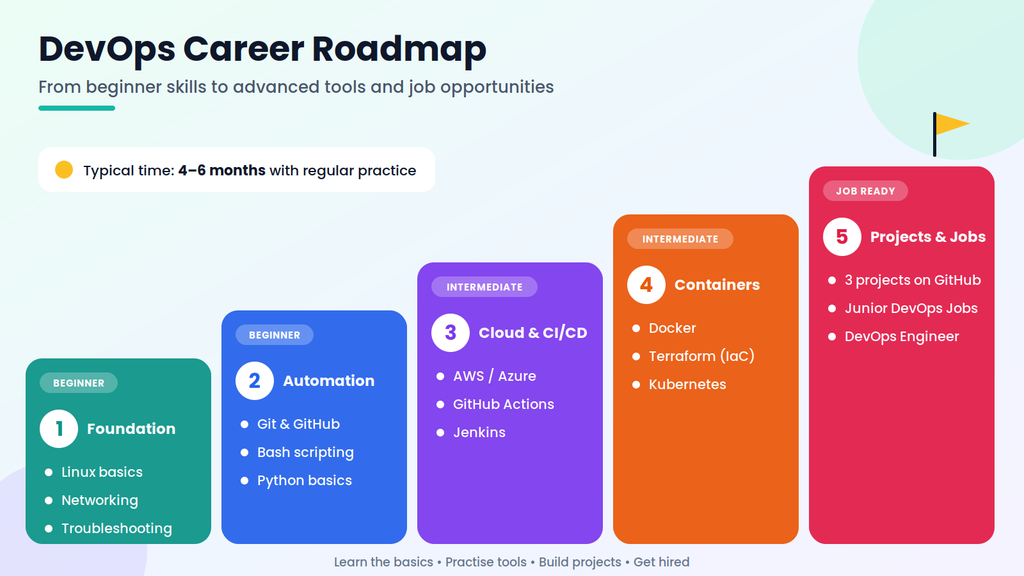
How to Learn DevOps Step by Step as a Beginner
The best way to learn DevOps is to follow a clear roadmap. Start with the fundamentals of IT and work your way up to cloud platforms, automation, and deployment. Practice each lesson before going on to the next. This method simplifies learning and clarifies how various DevOps tools interact.
Step 1: Learn Linux and Networking Basics
Linux is widely used to manage servers and run applications. Understanding how computers, programs, and servers interact with one another is made easier by networking. These skills are important because DevOps engineers regularly work with servers and troubleshoot technical problems.
Start by learning:
- Basic Linux commands and file management.
- User permissions and process management.
- IP addresses, DNS, HTTP, and SSH.
- Basic server troubleshooting.
Practical example: Create a Linux virtual machine and practise creating files, managing users, and checking running processes.
Step 2: Understand Git and Scripting
Git makes it easier for engineers to collaborate and monitor code changes. Scripting helps automate repetitive tasks, saving time and reducing manual errors. Beginners can start with Git and Bash before learning basic Python.
Focus on:
- Git commits, branches, merges, and repositories.
- Basic Bash commands and scripts.
- Python fundamentals for simple automation.
- Uploading projects to GitHub.
Practical example: Write a simple script that checks disk space and displays a warning when storage becomes low.
Step 3: Learn Cloud Computing and CI/CD
Cloud computing enables businesses to store data and operate apps without having to handle each physical server. CI/CD automates steps such as building, testing, and deploying software. Learning these concepts helps beginners understand how applications move from development to production.
Start with:
- One cloud platform, like Google Cloud, AWS, or Azure
- Virtual machines, storage, and cloud networking.
- GitHub Actions or Jenkins for automated workflows.
- Basic cloud security and access permissions.
Practical example: Create a pipeline that automatically tests your code whenever you upload a new change.
Step 4: Practise Docker and Infrastructure Automation
Docker packages applications with the files and dependencies they need to run. Using configuration files, Infrastructure as Code technologies like Terraform enable the creation of cloud resources. Once you understand these concepts, you can explore Kubernetes for managing containerised applications.
Learn these topics gradually:
- Docker images and containers.
- Container ports, environment variables, and storage.
- Terraform basics.
- Kubernetes fundamentals after understanding Docker.
Practical example: Package a sample website in Docker and deploy it on a test server.
Step 5: Build Real-World DevOps Projects
Projects help you apply your knowledge and show employers what you can do. Instead of only watching tutorials, build small applications and improve them step by step. Document your work so that recruiters can understand your skills and the problems you solved.
Try these beginner-friendly DevOps projects:
- Automate server health checks using Bash.
- Build a CI/CD pipeline using GitHub Actions.
- Containerise a sample web application with Docker.
- Install a program on a cloud server.
- Use Grafana and Prometheus to track application performance.
Students who want to gain practical DevOps knowledge through guided training can consider ProIT Academy, which offers DevOps training in Pimpri-Chinchwad, Pune. Before enrolling, check the course syllabus, hands-on projects, and available placement support to see if it meets your learning needs.
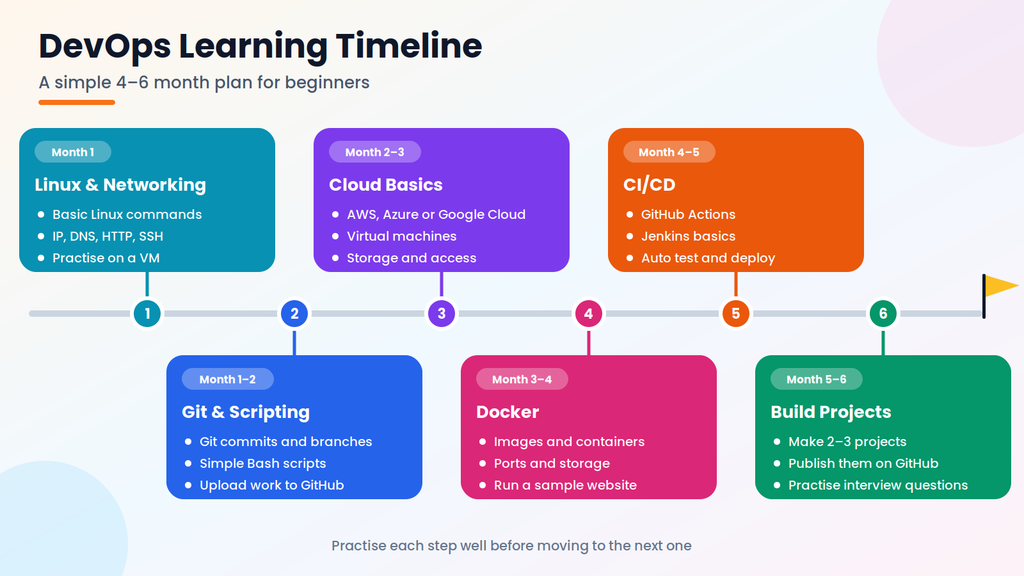
Self-Learning vs Classroom Training
| Learning method | Best suited for | Main benefit |
| Free online resources | Self-motivated learners | Low cost |
| Online training | Flexible learners | Structured lessons |
| Classroom training | Students needing guidance | Direct trainer support |
| Project-based learning | Practical learners | Portfolio development |
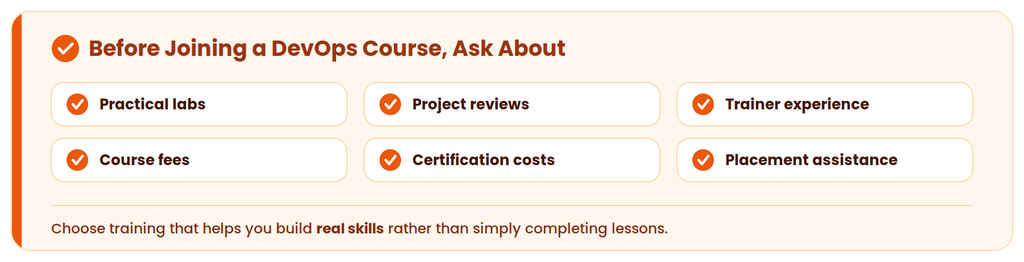
A structured DevOps course in Pune may help beginners who need a clear syllabus, practical assignments, and interview preparation. Before enrolling, check the course content, trainer experience, lab access, project work, and placement terms.
Students comparing IT Courses in Pune With Placement should also confirm whether placement support includes mock interviews, CV preparation, and employer connections. No training programme can guarantee a job.
What DevOps Skills and Tools Should You Learn in 2026?
To become a DevOps engineer, focus on skills that help you manage servers, automate workflows, deploy applications, and solve technical problems. You don’t have to become an expert with every tool immediately. Learn the basics first, then practise the tools required for your target job.
Essential DevOps Engineer Skills
- Linux: Manage servers and understand operating systems.
- Networking: Troubleshoot connectivity and communication problems.
- Git: Track code changes and collaborate with developers.
- Scripting: Automate repetitive work using Bash or Python.
- CI/CD: Automate software testing and deployment.
- Cloud computing: Manage applications and infrastructure.
- Docker and Kubernetes: Package and manage applications.
- Monitoring and security: Track performance and protect systems.
Important DevOps Tools for Beginners
| Skill area | Popular tools | Priority |
| Version control | Git, GitHub | Essential |
| Operating systems | Linux | Essential |
| CI/CD | Jenkins, GitHub Actions | High |
| Containers | Docker | High |
| Cloud | AWS, Azure, Google Cloud | High |
| Infrastructure automation | Terraform | Intermediate |
| Container orchestration | Kubernetes | Intermediate |
| Monitoring | Prometheus, Grafana | Intermediate |
Practical tip: Build one complete project using GitHub, GitHub Actions, Docker, and a cloud virtual machine. This will make it easier for you to understand how various DevOps tools interact.
Your resume can benefit from a DevOps certification, but real-world experience is just as important. Choose a certification that matches your learning level and target role.
DevOps Career Opportunities in 2026: Job Roles and Salary for Freshers
DevOps offers different career paths for students with technical knowledge and practical skills. Freshers may start in cloud support, Linux administration, or junior engineering roles before moving into more specialised positions.
The following salary figures are indicative annual estimates for India, not guaranteed offers. Actual salaries depend on the company, location, experience, and technical ability.
| Job role | Key skills | Experience level | Expected annual salary |
| Cloud Support Associate | Linux, networking, cloud basics | Fresher–1 year | ₹3–6 LPA |
| Junior System Administrator | Linux, scripting, troubleshooting | Fresher–2 years | ₹3–6 LPA |
| Junior DevOps Engineer | Git, CI/CD, Docker, cloud basics | Fresher–2 years | ₹4–8 LPA |
| Build and Release Engineer | Git, automation, CI/CD | 1–3 years | ₹4–9 LPA |
| DevOps Engineer | Cloud, Terraform, containers, monitoring | 2–5 years | ₹7–15 LPA |
Note: These are broad planning estimates, not verified live salary data. Entry-level salaries can fall outside these ranges.
How Can Freshers Prepare for DevOps Jobs?
Students can improve their chances of finding DevOps jobs by focusing on practical skills and interview preparation.
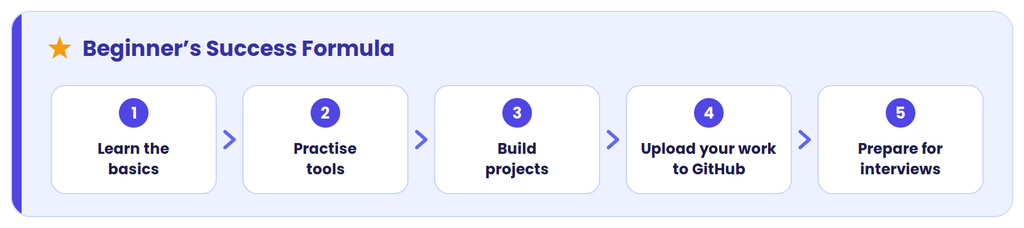
- Create two or three projects, then post them to GitHub.
- Practise Linux, networking, Git, and CI/CD interview questions.
- Prepare a CV that explains your projects and responsibilities.
- Apply for junior DevOps, cloud support, and system administration roles.
- Keep learning based on the requirements in actual job descriptions.
For students looking to build a successful DevOps career, ProIT Academy is a great choice, offering expert trainer guidance, hands-on real-time projects, practical learning, and placement support to help students prepare for industry opportunities.
Conclusion
The best way to learn DevOps in 2026 is to start with Linux, networking, Git, and scripting before moving to cloud computing, CI/CD, Docker, and automation. You can gain the abilities that employers value via consistent practice and hands-on tasks. Choose a learning method that suits your budget, build a strong portfolio, and prepare carefully for interviews. If you prefer structured guidance, compare the syllabus and practical training offered by a DevOps course in Pune before making your decision. Consistent learning is the key to building a successful DevOps career.
Frequently Asked Questions (FAQs)
1. Is it possible for a beginner to learn DevOps without knowing any code?
Yes, beginners can start with Linux, networking, and Git before learning basic Bash or Python scripting. With structured training and regular practice at ProIT Academy, students can gradually build the skills needed to start learning DevOps.
2. How long does it take to learn DevOps?
With consistent practice, beginners may need around 4–6 months to develop foundational DevOps skills. The time required depends on prior knowledge, practical experience, and the time spent learning.
3. Are DevOps classes in Pune good for freshers?
When they include projects, practical labs, and interview preparation, they can be beneficial. Before enrolling, compare the course material, the trainer’s experience, and the placement terms.
4. How can I find good DevOps classes near me?
Compare nearby institutes based on practical training, course fees, trainer support, and project work. Attend a demo session and check placement assistance before choosing.
5. Is DevOps certification enough to get a job?
No. Certification can support your profile, but employers also value practical projects, troubleshooting skills, cloud knowledge, and the ability to explain your work.