
Can a B.Tech degree alone help graduates start a career in DevOps, or do they need to develop additional technical skills? This is a common question among engineering graduates preparing to enter the IT industry. DevOps combines software development, IT operations, cloud computing, automation, testing, and monitoring, so having a strong technical foundation is only the beginning. Graduates who explore DevOps Classes in Pune can strengthen their knowledge through practical learning and gain exposure to tools such as Linux, Git, Docker, cloud platforms, CI/CD, and automation. Along with theoretical concepts, working on real-world projects and practicing these tools regularly can help B.Tech graduates build the practical skills needed to explore entry-level DevOps opportunities.

Is DevOps a Good Career Option for B.Tech Freshers?
For B.Tech graduates interested in technology, infrastructure, software delivery, or cloud platforms, DevOps can offer several career paths. Unlike a role focused only on coding, DevOps connects development and operations, requiring professionals to understand how applications are built, tested, deployed, monitored, and maintained.
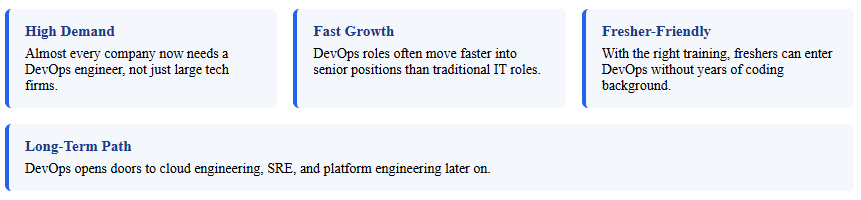
What Makes DevOps Relevant for B.Tech Graduates?
- Technical concepts learned during engineering can support further DevOps learning.
- Cloud platforms are increasingly used for application infrastructure.
- Automation reduces repetitive operational work.
- CI/CD helps teams deliver software through structured development and deployment workflows.
- Containers make application deployment more consistent across environments.
- Monitoring helps teams identify and investigate application and infrastructure problems.
Learners exploring DevOps training options can also consider ProIT Academy as one of the educational resources available for structured learning. While comparing different courses, it is important to look beyond the course name and check the curriculum, hands-on projects, trainer support, and practical exposure to tools commonly used in DevOps. These factors can give students a clearer idea of how well a course aligns with their learning goals and career plans. For students researching Best Devops Classes in Pune, it is useful to examine whether the curriculum reflects these real workplace activities.
Skills and Tools for a DevOps Career After B.Tech
A successful DevOps career requires more than knowing a list of tools. Graduates should understand what each tool is used for, when it is needed, and how it supports the overall development and deployment process.
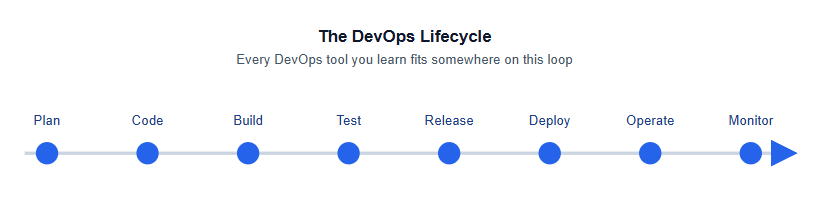
Today’s DevOps environments bring together source control, automated testing and builds, application deployment, containers, cloud infrastructure, monitoring, and infrastructure management. For learners exploring IT Courses in Pune, understanding these areas can provide a practical foundation for working with modern DevOps practices, including CI/CD pipelines, automated testing, deployment strategies, configuration management, Infrastructure as Code (IaC), and continuous monitoring.
DevOps Required Skills
- Linux & OS: Learn commands, processes, users, and permissions
- Version Control: Learn branching, merging, and code collaboration
- CI/CD: Learn automated building, testing, and deployment
- Containers: Learn how to create and manage containers
- Orchestration: Learn container deployment and scaling
- Cloud Computing: Learn cloud services, networking, storage, and IAM
- IaC: Learn automated infrastructure setup and management
- Monitoring & Logging: Learn metrics, logs, dashboards, and alerts
- Configuration Management: Learn automated server setup and configuration
DevOps Tools
- Linux: Learn essential commands and system management
- Git & GitHub: Learn repositories, commits, branches, and merging
- Jenkins & GitHub Actions: Learn CI/CD workflow automation
- Docker: Learn images, containers, and registries
- Kubernetes: Learn container deployment and scaling
- AWS & Azure: Learn core cloud services and infrastructure
- Terraform & CloudFormation: Learn infrastructure provisioning through code
- Prometheus & Grafana: Learn monitoring, metrics, and dashboards
- Ansible: Learn automated configuration and server management
The important DevOps engineer skills are not limited to technical knowledge. Communication, documentation, troubleshooting, collaboration, and analytical thinking are also valuable because DevOps professionals frequently work between development, testing, security, and operations teams. Students searching for Devops Course in Pune should therefore look for programs that provide hands-on practice instead of concentrating only on definitions and certification preparation.
Top DevOps Job Roles for B.Tech Graduates
A career in DevOps can lead to different technology roles as graduates build their skills and gain practical experience. For those looking to develop a strong foundation, DevOps Training in Pune can help learners gain hands-on knowledge of cloud, automation, deployment, and monitoring while exploring different career paths in the DevOps field.
| Role | Key Responsibilities | Experience | Approx. Salary in India |
| Junior DevOps Engineer | Supports CI/CD, deployments, monitoring, troubleshooting, and basic automation. | 0–2 years | ₹3–7 LPA |
| Cloud/DevOps Engineer | Manages cloud infrastructure, deployments, automation, and related DevOps processes. | 2–5 years | ₹6–14 LPA |
| Site Reliability Engineer (SRE) | Works on system reliability, availability, monitoring, automation, and performance. | 2–6 years | ₹7–16 LPA |
| Build & Release Engineer | Handles build processes, version control, release workflows, and deployment automation. | 1–5 years | ₹5–12 LPA |
| Platform Engineer | Builds internal platforms and reusable tools that make application deployment and management easier. | 3–7 years | ₹8–18 LPA |
Therefore, when searching for DevOps engineer jobs, beginners should read the actual job description instead of applying based only on the job title. The demand for DevOps engineers is closely connected with organizations adopting cloud infrastructure, automation, CI/CD, containers, and modern software delivery practices. Microsoft, for example, describes Azure DevOps around planning, collaboration, repositories, CI/CD, testing, and security capabilities.
How to Build a DevOps Career After B.Tech
Step 1: Start With the Basics
Begin with Linux, networking, Git, scripting, and basic software concepts. These skills help you understand how DevOps environments work. Spend time practising instead of only reading about the concepts.
Step 2: Choose One Cloud Platform
Start with one cloud platform and learn its basic services properly. Focus on compute, storage, networking, IAM, and monitoring before moving to another platform. A strong foundation will make other cloud platforms easier to learn later.
Step 3: Build a CI/CD Pipeline
Create a small project and connect the main stages of the DevOps workflow. You can practise moving code from a Git repository through building and testing to Docker-based deployment. This gives you a clearer idea of how the different tools work together.
Step 4: Work on Practical Projects
Projects help turn your technical knowledge into hands-on experience. Try building a simple web application, storing the code in GitHub, creating a Docker image, setting up CI/CD, and deploying it to the cloud. Add basic monitoring to make the project more complete.
Step 5: Create a Simple Portfolio
You do not need a large number of projects to show your skills. Two or three properly documented projects can give recruiters a better understanding of your practical experience. Explain the problem, tools used, implementation, challenges, and solution for each project.
Step 6: Prepare for Interviews
DevOps interviews usually include both technical concepts and real-world situations. Revise topics such as Linux, Git, CI/CD, Docker, Kubernetes, cloud, networking, Terraform, monitoring, and troubleshooting. Practicing practical questions can also help you explain your approach more clearly during interviews.
When exploring DevOps Classes Near Me or the Best DevOps Training Institute in Pune, learners should also consider the Best Way to Learn DevOps, which includes hands-on labs, practical projects, interview preparation, and experience with current DevOps tools and workflows. A course that combines guided learning with regular practice can help students understand concepts more clearly and apply them to real-world tasks.
Frequently Asked Questions
1. Is DevOps a good career after B.Tech?
Yes. B.Tech graduates can explore a DevOps career by building practical skills in Linux, Git, cloud computing, CI/CD, Docker, Kubernetes, and automation.
2. Which skills are required for a DevOps career after B.Tech?
Important DevOps required skills include Linux, networking, scripting, Git, CI/CD, cloud platforms, Docker, Kubernetes, Infrastructure as Code, and monitoring.
3. Are DevOps Classes in Pune useful for B.Tech graduates?
DevOps Classes in Pune can provide structured learning and hands-on practice with cloud, CI/CD, containers, and automation. Choose a program that includes practical projects rather than theory alone.
4. What should I learn in a DevOps Course in Pune?
A practical DevOps Course in Pune should cover Linux, Git, cloud computing, CI/CD, Docker, Kubernetes, Terraform, scripting, monitoring, and real-world deployment projects.
5. Can I get a DevOps job as a fresher after B.Tech?
Yes, but practical ability matters. Build projects, learn commonly used DevOps tools, understand deployment workflows, and prepare for entry-level roles such as Junior DevOps Engineer or Cloud/DevOps Engineer.
Conclusion
A B.Tech degree can give graduates a solid starting point for entering the DevOps career, but practical experience is what helps turn that foundation into useful workplace skills. Beginners can start with Linux, networking, Git, scripting, and cloud basics, then gradually move toward CI/CD, Docker, Kubernetes, Infrastructure as Code, and monitoring.
For learners considering DevOps Classes in Pune, structured training can provide guidance while hands-on projects help reinforce what is taught. Resources such as ProIT Academy can also support the learning journey. Whether you choose classroom training, self-study, or a combination of both, the main focus should be on understanding how DevOps tools work together and applying that knowledge to practical situations.