Choosing the right programming language is an important first step for students who want to build a successful career in IT. Python vs. Ruby is a common comparison because both languages are easy to understand and useful for software development. Python is popular in artificial intelligence, data science, automation, and web development, while Ruby is mainly known for building web applications. If you are searching for Python classes in Pune, understanding the difference between these languages can help you make the right decision.
What Is Python?
Python is a popular programming language used to give instructions to computers and build useful applications. Its code is written in simple, readable English-like statements, which makes it easier for beginners to understand. Python can be used to create websites, analyse data, automate repetitive tasks, and develop artificial intelligence applications. For example, a student can use Python to build a calculator, create an expense tracker, or develop a basic chatbot. Because Python is useful in many technology fields, it is a practical choice for students who want to explore different career options.
Main Features of Python
- Simple and Readable Syntax: Python code is easy to read and understand. Beginners can focus on learning programming logic instead of memorising complicated rules.
- Large Collection of Libraries: Libraries such as Pandas and NumPy help developers analyse data, while frameworks such as Django support web development.
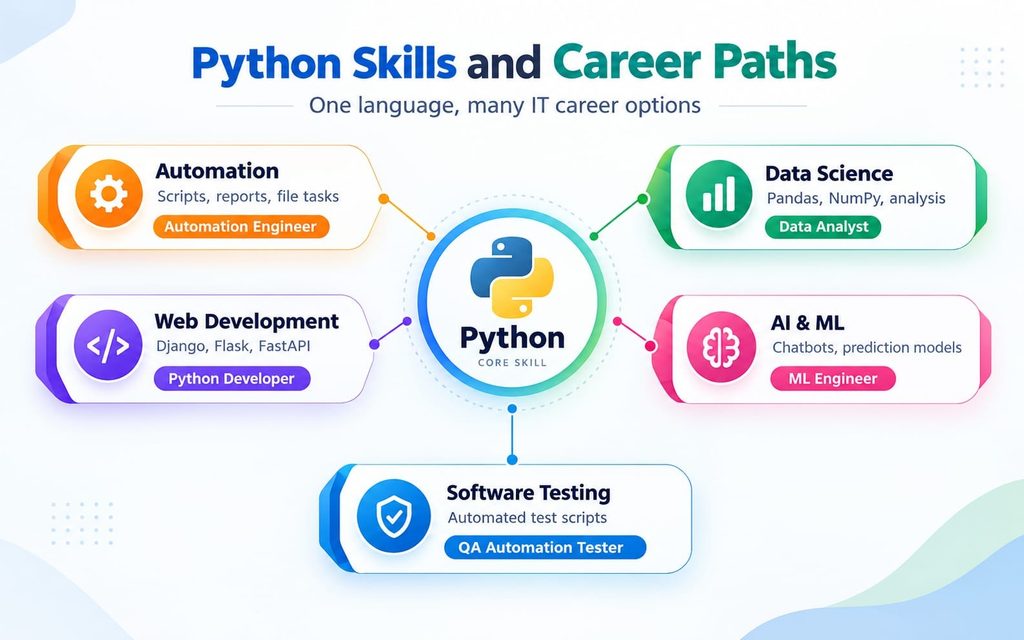
- Versatile Applications: Python is used in AI, machine learning, data analytics, automation, and software testing. Students can explore different career paths using the same language.
- Strong Community Support: Python has a large community of developers. Beginners can find tutorials, documentation, and solutions to common coding problems.
Benefits of Learning Python
Professional Skill Development: Enrolling in Python training at ProIT Academy can be a learning option for students looking to develop programming skills through structured training and practical projects. Combining these skills with a Python Certification and interview preparation can help students work towards their career goals.
Easy for Beginners: Students can start learning Python without previous programming experience. Regular practice helps them understand basic coding concepts.
Multiple Career Options: Python skills can support careers in web development, data analysis, automation, and AI. This flexibility is useful when choosing a specialisation.
Practical Project Development: Students can create chatbots, websites, calculators, and data dashboards. These projects help demonstrate skills during interviews.
Professional Skill Development: Enrolling in Python training at ProIT Academy can be a learning option for students looking to develop programming skills through structured training and practical projects. Combining these skills with a Python Certification and interview preparation can help students work towards their career goals.

Limitations of Python
Slower in Some Applications: Python can be slower than compiled languages for certain performance-intensive tasks. Developers may need optimisation or additional technologies.
Not Ideal for Every Project: Python is not the first choice for every mobile or system-level application. The best language depends on the project’s requirements.
Dynamic Typing Can Cause Errors: Some mistakes may appear only when a program runs. Testing and careful coding help reduce these problems.
Become a python developer at Python Classes in Pune.
What Is Ruby?
Ruby is a programming language used to create websites, web applications, and other software. Like Python, it has readable syntax that makes it approachable for beginners. Ruby is especially popular because of Ruby on Rails, a framework that helps developers build web applications more efficiently. For example, Ruby on Rails can be used to create an online booking system, an e-commerce website, or a platform where users create accounts and manage information. Ruby is a useful option for students who enjoy website development and want to understand how applications work behind the scenes.
Main Features of Ruby
- Easy-to-Read Code: Ruby uses a clean syntax that makes programs easier to understand and maintain.
- Object-Oriented Programming: Ruby organises code around objects, helping developers reuse code and manage larger applications.
- Ruby on Rails Framework: Rails provides ready-made tools for handling databases, web pages, and application features.
- Flexible Development: Ruby gives developers different ways to solve problems, making it useful for building customised applications.

Benefits of Learning Ruby
- Efficient Web Development: Ruby on Rails helps developers build functional web applications without writing every component from scratch.
- Useful Backend Skills: Students learn concepts such as databases, APIs, authentication, and server-side programming.
- Faster Application Building: Rails includes conventions and tools that reduce repetitive development work.
- Practical Portfolio Projects: Students can create booking websites, online stores, and customer management systems to demonstrate their abilities.
Limitations of Ruby
- Fewer Specialised Applications: Ruby is less commonly used than Python for AI, machine learning, and data science.
- More Focused Job Market: Ruby opportunities are often concentrated in companies that use Ruby on Rails or maintain existing Ruby applications.
- Performance Considerations: Certain applications may require additional optimisation as traffic and system complexity increase.
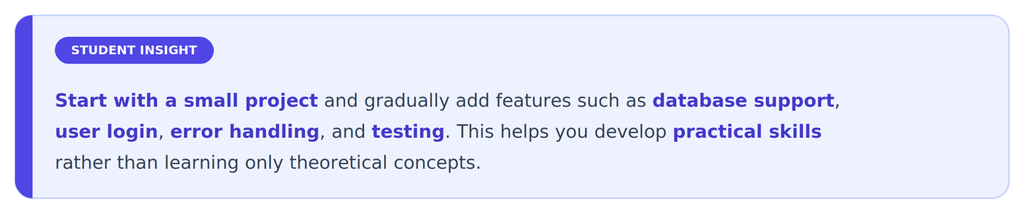
Student insight: You do not need to learn several programming languages at the same time. Start with one language, practise regularly, and build two or three working projects. Practical experience helps you understand concepts and gives you something useful to present to recruiters.
Python vs Ruby: Key Differences Explained
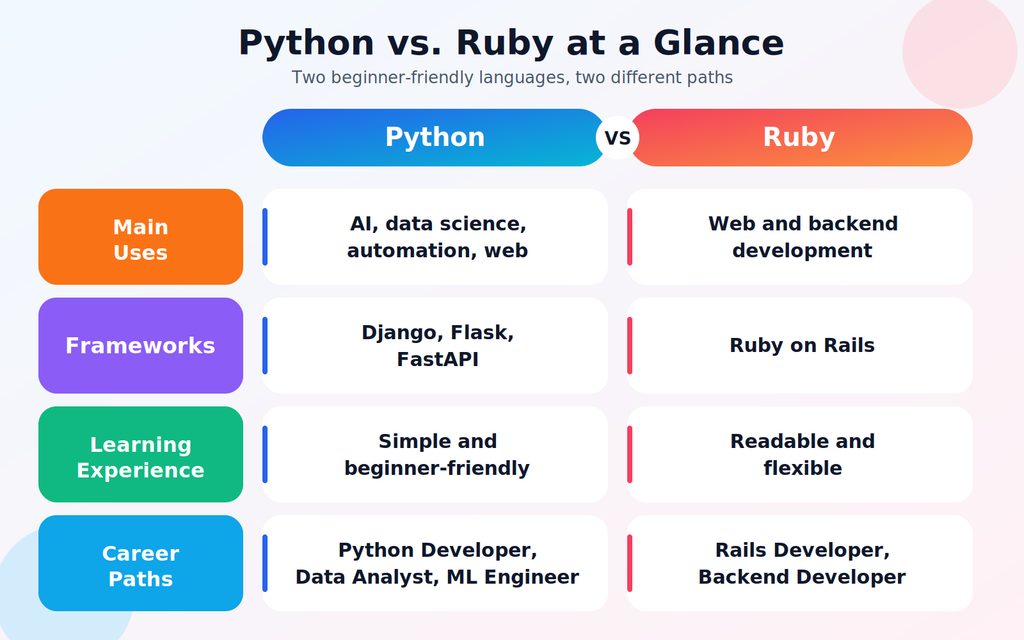
Python and Ruby are both high-level programming languages, but they are commonly used for different purposes. Python offers a broad range of applications, while Ruby is especially recognised for web development with Rails.
| Comparison factor | Python | Ruby |
| Learning experience | Simple and beginner-friendly | Readable and flexible |
| Main applications | AI, data science, automation, web development | Web and backend development |
| Popular frameworks | Django, Flask, FastAPI | Ruby on Rails |
| AI and data science | Extensive ecosystem | More limited ecosystem |
| Web development | Widely used | Particularly popular with Rails |
| Best for students interested in | Multiple technology career paths | Web application development |
Python is a practical starting point if you are unsure which IT field to choose. Ruby may suit you better if you already know that you want to focus on web applications.
How Python and Ruby Are Used in Real Projects
Both languages solve real business problems. The main difference is the type of project and technology ecosystem a developer chooses.
Where Is Python Used?
- Artificial Intelligence and Machine Learning: Python supports the development of chatbots, recommendation systems, and prediction models. Developers use specialised libraries to train and test models.
- Data Analysis and Reporting: Businesses use Python to process sales data, identify trends, and generate reports. For example, a retail company can analyse which products sell best.
- Automation: Python can automate repetitive activities such as renaming files, processing spreadsheets, and generating routine reports. This saves time and reduces manual work.
- Web Development: Frameworks such as Django and Flask help developers create websites, APIs, and backend services.
- Software Testing: Python scripts can automate software tests and help teams identify problems before releasing applications.
Where Is Ruby Used?
- E-Commerce Websites: Ruby on Rails can support online stores with product listings, user accounts, and order management.
- Booking Applications: Developers can build appointment scheduling systems for businesses such as salons, clinics, or service providers.
- Customer Management Systems: Ruby applications can help businesses organise customer information, track enquiries, and manage internal processes.
- Web Application Backends: Ruby can handle databases, user authentication, and communication between a website’s frontend and backend.
For example, a student interested in AI could create a Python chatbot, while someone interested in web development could build a Ruby booking platform.
Students exploring other programming languages can also compare these choices with Python vs. Java to understand how different languages support different types of software projects.
Python vs Ruby: Which Has More Job Opportunities?
Both languages offer career opportunities, but their job markets differ. Python generally provides access to more types of technical roles because it is used across software development, data analytics, AI, automation, and testing. Ruby is valuable for web development, particularly in companies that use Ruby on Rails.
Career Opportunities with Python
Python is a strong option for students who want flexibility when choosing a technical specialisation.
- Python Developer: Builds applications, APIs, and backend systems using Python.
- Data Analyst: Uses Python, SQL, and data visualisation tools to understand business information.
- Automation Engineer: Creates scripts and automated workflows to reduce repetitive work.
- Machine Learning Engineer: Develops and deploys models that learn from data.
To prepare for these roles, students should practise Python fundamentals, SQL, Git, debugging, and project development. A structured Python Certification course may support learning, but practical skills and a project portfolio are equally important.
Career Opportunities with Ruby
Ruby is a suitable option for students who want to specialise in web application development.
- Ruby on Rails Developer: Builds and maintains websites and web applications.
- Backend Developer: Develops APIs, database connections, and server-side features.
- Full-Stack Developer: Works on both frontend and backend components, depending on the employer’s technology stack.
- Application Maintenance Developer: Improves existing Ruby applications, fixes bugs, and adds new features.
Ruby learners should focus on Rails, SQL, APIs, Git, testing, and web development fundamentals. Reviewing local job listings can help students understand the demand for Ruby skills before committing to a specialisation.
Career Opportunities and Expected Salaries in India
The salary figures below are approximate annual estimates for planning purposes, not guaranteed offers. Actual compensation depends on skills, location, employer, and experience.
| Job role | Important skills | Experience level | Expected annual salary |
| Junior Python Developer | Python, SQL, Git | 0–2 years | ₹3–7 LPA |
| Python Automation Engineer | Python, scripting, testing | 0–3 years | ₹3.5–8 LPA |
| Data Analyst | Python, SQL, Excel | 0–3 years | ₹3.5–8 LPA |
| Machine Learning Engineer | Python, ML, statistics | 1–4 years | ₹6–15 LPA |
| Ruby on Rails Developer | Ruby, Rails, SQL, APIs | 0–3 years | ₹4–9 LPA |
| Senior Backend Developer | Python or Ruby, system design | 4+ years | ₹10–25+ LPA |
Students considering IT courses in Pune with Placement should check the course syllabus, hands-on assignments, live projects, interview preparation, and placement records. ProIT Academy can be included in your research when comparing training providers, but confirm the current course details and placement support directly before enrolling.
If you are searching for Python classes near me, compare practical training, mentor support, and portfolio development rather than selecting a course based only on price.
Conclusion
You can do anything in Ruby on Rails, in Python, and Django also. Which better framework is not a matter of ability? The best question can be: What is the team’s best language?
Then try prioritizing Ruby on Rails if you intend to stick to creating web applications. The community is good and always on the edge of the bleeding if you are interested in developing web applications but want to learn a language that can be more commonly used and more knowledgeable then you should learn Python. Also to learning these Job Oriented Courses like Python and Ruby you can visit us.
Frequently Asked Questions
1. Is Python easier than Ruby for beginners?
Both languages are beginner-friendly. Python is often recommended first because its simple syntax and wide range of applications help students explore different technical fields.
2. Is Python better than Ruby for jobs?
Python generally offers opportunities across more industries, including AI, data analytics, automation, and web development. Ruby is valuable for roles involving web development and Ruby on Rails.
3. Can I learn Python without a technical background?
Yes. Start with variables, loops, functions, and basic coding exercises. Regular practice and small projects can help you develop programming skills from scratch.
4. Is Ruby worth learning in 2026?
Yes. Ruby remains useful for web application development, particularly in companies using Ruby on Rails. Check current job listings to assess demand in your target location.
5. Should I learn Python or Ruby first?
Python is a practical choice if you want to explore multiple IT careers. Ruby is worth considering if your main interest is developing websites and web applications.